In a world that relies on connectivity across nearly every industry, even a brief interruption can have major consequences. From banks and healthcare providers to public safety agencies and residential customers, reliable communication depends on an extensive network of fiber infrastructure working behind the scenes.
But what happens when that infrastructure gets damaged? Whether caused by construction, agricultural activity or even wildlife, a fiber cut can disrupt service to an individual client, or in some cases, an entire community.
For SDN Communications, restoring connectivity involves much more than simply locating and repairing damaged cable. It takes proactive monitoring, specialized technology, experienced field crews and coordination across multiple teams and departments.
Identifying the problem
SDN’s Network Operations Center (NOC) is constantly monitoring network performance, allowing technicians to identify disruptions and begin troubleshooting as soon as unusual activity arises. If a major fiber issue occurs, the network may generate thousands of alarms in a short period of time.
“We’re troubleshooting incidents most of the time before people are even calling us,” said Rocky Miller, Director of Network Operations.
Once an alarm pops up, the team works to narrow down the affected area, identifying the section of the network where the disruption is happening. Technicians also determine which services, customers and network partners may be affected.
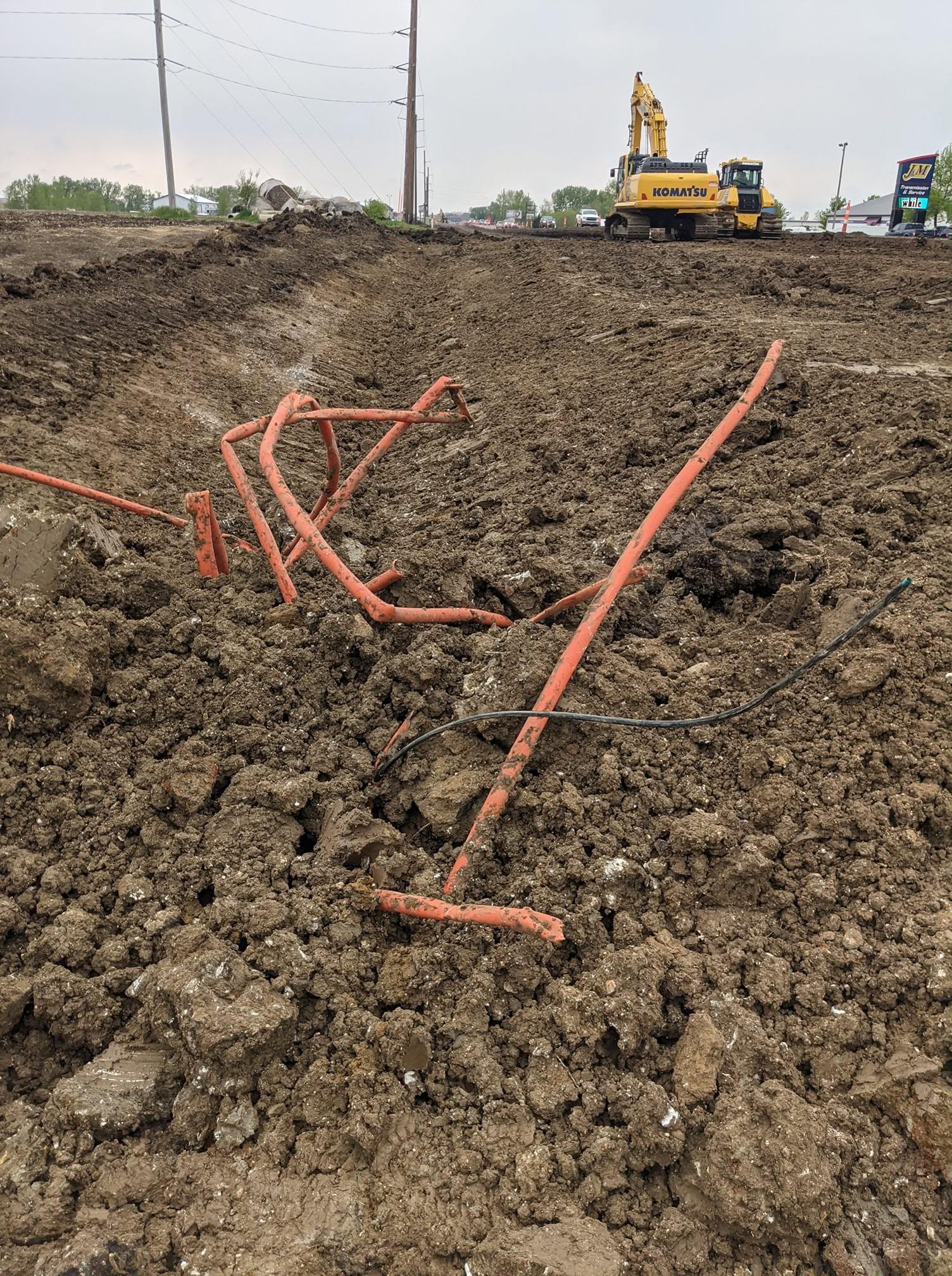
Fiber cuts or damage can occur for a variety of reasons. Construction and excavation are common culprits, especially when crews are installing roads, water pipelines or other underground systems. Agricultural activity, like drainage tile installation, can also put buried fiber at risk.
Not every incident results in a complete break. In some cases, a cable may be partially damaged, affecting only a handful of individual fiber strands while others continue functioning.
“One of our most challenging damages did not involve a shovel or excavator. It involved a gopher,” said Chris Haiar, Manager of Outside Plant Engineering. “Gopher chews are difficult to troubleshoot because only a few fibers within the cable are damaged, while other fibers within the cable are still actively working.”
Pinpointing the damage
SDN uses Optical Time Domain Reflectometer (OTDR) technology to help locate breaks in fiber. An OTDR sends pulses of light through a fiber strand and measures the reflected light to determine the distance to a potential fault.
SDN's network equipment includes integrated OTDR modules that allow technicians to collect these traces remotely, without having to travel to a site to perform the initial testing. That information helps narrow the search area and provide better direction for field crews.
The Outside Plant Engineering team also uses software to plot the suspected fault location along the fiber route. By comparing that information with South Dakota One-Call excavation tickets, engineers can sometimes identify nearby construction activity that may have contributed to the damage.
"In our mapping software, the damage distance is added to the virtual fiber route, and a fault icon appears on the map where the damage is suspected,” Haiar said.
Once the location has been narrowed down, the team can begin the field investigation.
From locating the break to restoring service
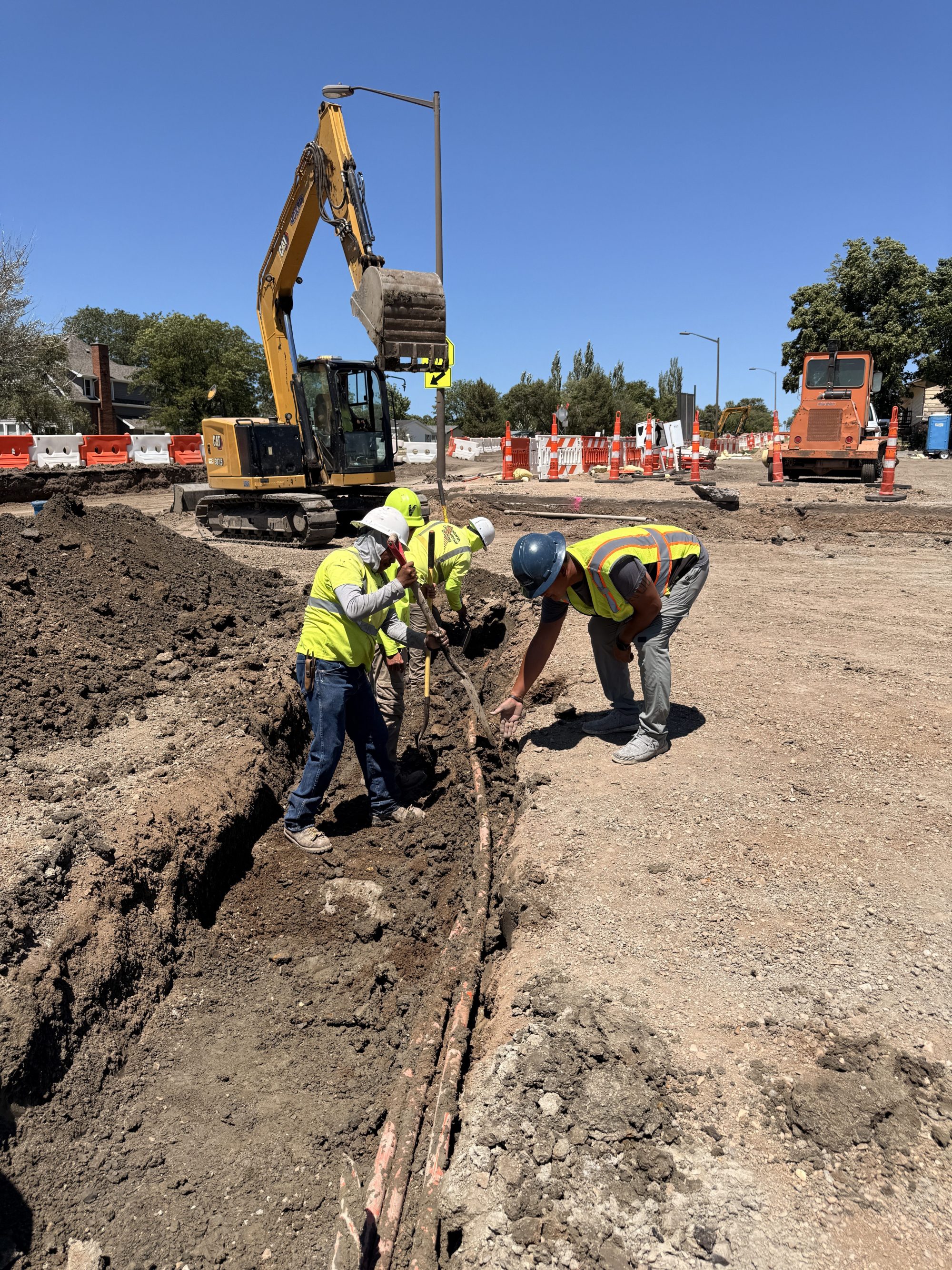
After the damage is confirmed, SDN coordinates with its outside contractors to begin the physical restoration process. The company works with two specialized contractors: Engbarth Directional Drilling, which handles underground excavation and fiber placement, and Wiltech, which performs fiber splicing.
The underground restoration crew evaluates the damage and develops a repair plan with SDN's Outside Plant Engineering team. Before excavation begins, an emergency South Dakota One-Call ticket is submitted so other underground utilities can be located and marked. During that time, SDN coordinates the delivery of necessary materials and equipment to the site.
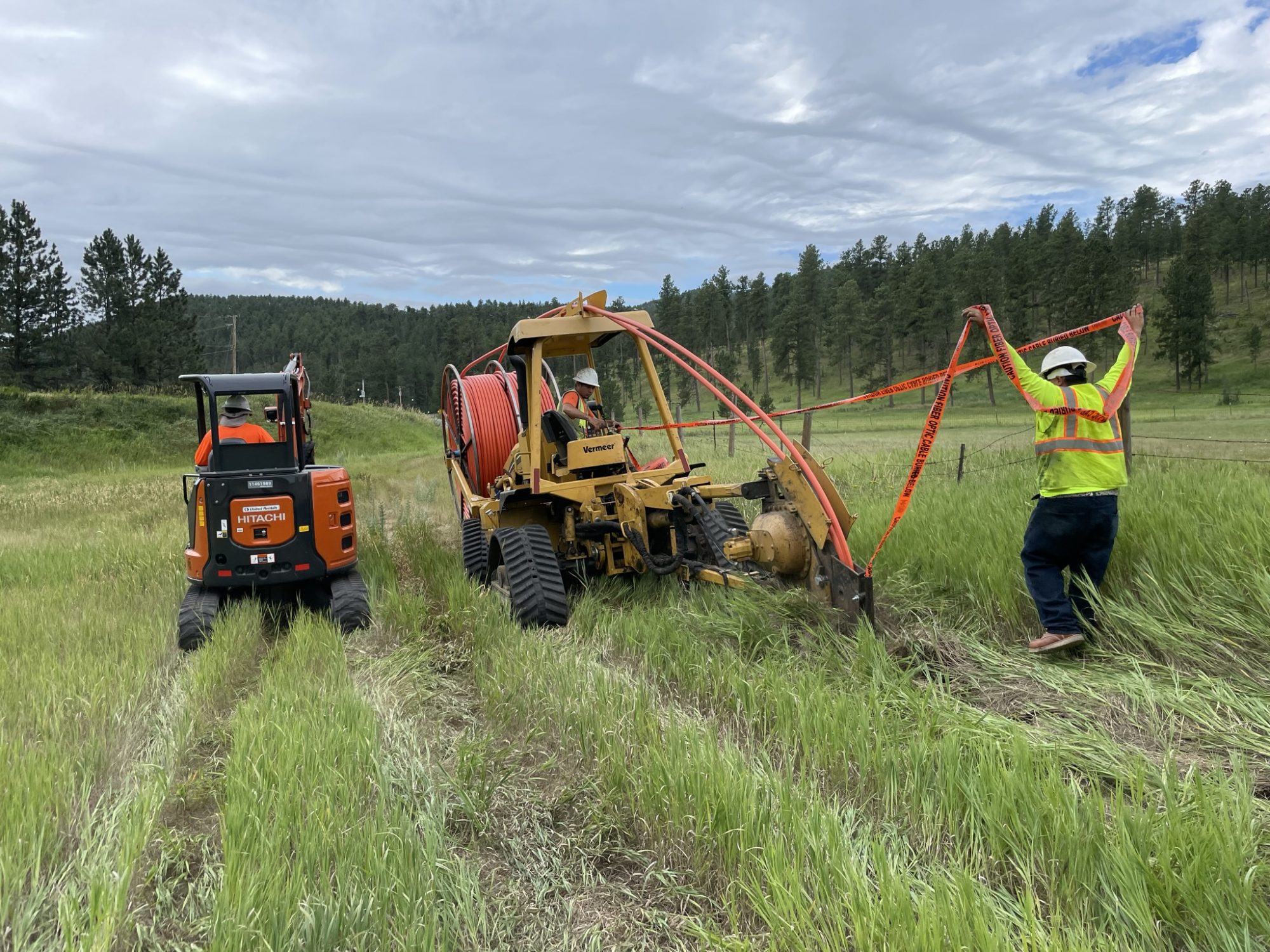
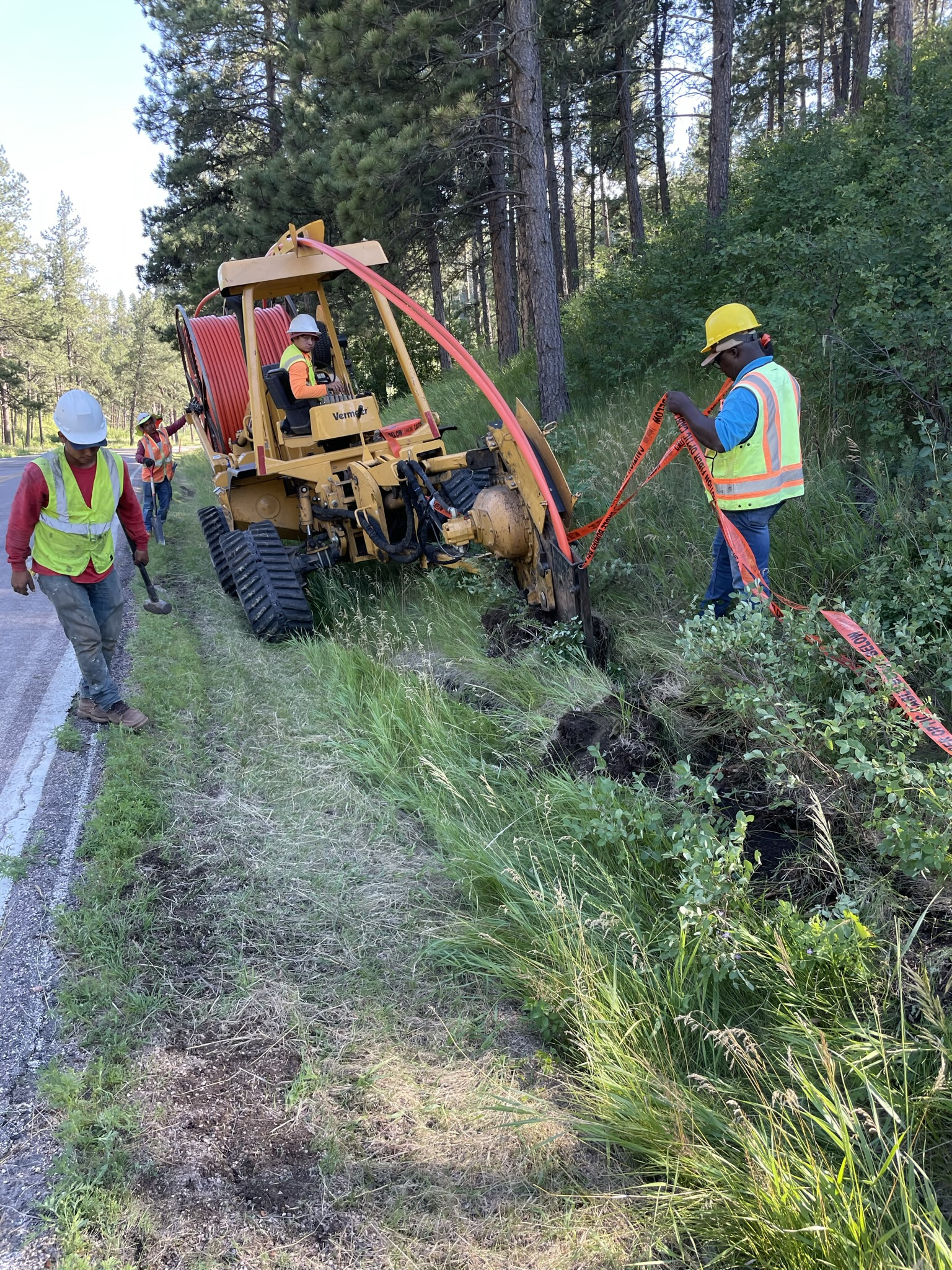
"A directional boring machine and excavator are critical pieces of equipment needed to replace the damaged portion of cable,” Haiar said.
Depending on the circumstances, restoration may involve removing damaged cable, repairing conduit and installing new fiber. Once the replacement cable is in place, splicing technicians prepare the cable ends and reconnect the affected fiber strands using specialized fusion-splicing equipment.
Restoration can become more complicated depending on the location and severity of the damage. Rain, snow and muddy conditions can slow crews, and frozen ground in the winter may require additional equipment to break through frost before the damaged cable can be reached. Fiber located beneath waterways or in difficult-to-access areas can also present significant challenges.
One feature of SDN's underground fiber infrastructure that helps simplify restoration is the use of innerduct, a protective conduit that houses the fiber cable.
Innerduct allows crews to remove the damaged fiber from each end, repair the conduit and pull new fiber through the existing pathway. While this approach requires a greater upfront investment, it can make repairs significantly faster and allow for a more permanent restoration rather than having to rebuild entire sections of underground infrastructure.
SDN also benefits from redundancy built into portions of its core network. When a fiber route is disrupted, many services can automatically reroute through other functioning portions of the network. Miller estimates that approximately 90% of services on the core network can switch to an alternate path during these types of incidents.
This means that a disruption to one fiber route doesn't necessarily result in a widespread service outage. When another path is available, network traffic can be redirected to keep services operating while crews work to repair the damaged infrastructure.
“Our self-healing network combines optical protection, redundant paths, and intelligent routing to automatically recover from disruptions, minimize downtime, and keep our customers connected.” said Miller.
However, not every connection has that protection. Individual customer connections without an alternate route may experience a complete service interruption, depending on where the damage occurs.
When connectivity becomes critical
In July of 2019, a contractor installing new guardrails along a roadway near Deadwood accidentally drilled into SDN's fiber, damaging the only fiber route into the area.
The consequences extended beyond internet connectivity, affecting critical infrastructure such as public safety communications, emergency radio systems, 911 services and wireless providers. Multiple state agencies also experienced disruptions to their systems.
The restoration took approximately eight hours, with crews facing additional logistical challenges because the damaged network limited their ability to communicate with people in the area.
“It was one of those moments that really showed the criticality to keep our network running,” said Miller. “With that many folks impacted, they can’t get much accomplished if they don’t have broadband, internet or cell service. It basically put those areas at a standstill.”
A coordinated effort to restore UPTIME
Behind every restoration is a coordinated effort involving the NOC, the Outside Plant Engineering team and its contractor partners. Each plays a distinct role, from identifying the disruption and notifying affected customers to locating the damage, coordinating repairs and verifying that services have been fully restored.
Communication is central to that process. SDN proactively notifies contractors when a potential fiber cut is suspected, allowing them to begin preparing for a response even before the physical damage has been confirmed. Throughout restoration, the NOC also keeps affected customers informed as the situation develops.
With dedicated contractors available around the clock, proactive network monitoring and infrastructure designed to simplify repairs, SDN is typically able to restore fiber cuts within six to 10 hours, depending on the location and circumstances.
"At SDN, we have a great team, including our contractors, working together for one goal: UPTIME,” said Haiar.
Achieving that goal takes planning and preparation that starts long before a cable is ever damaged, along with the technology, infrastructure and partnerships needed to maintain connection when it matters most.