This year alone, South Dakota 811 has received more than 1,000 reports of damage to underground infrastructure.
Each incident had the potential to be catastrophic, with results ranging from explosions and water line breaks to extensive internet and cell service interruptions. The cost to both infrastructure and human life can be huge in these situations. But there’s an easy way to help prevent such incidents - call 811.
What is 811?
Every state in the country maintains a free 811 phone line; a one-stop call center to ensure that all buried utility lines are marked before any digging project takes place. It’s simple. When a contractor or homeowner plans to do any digging at a site, they are required to call 811 or request a locate at www.sdonecall.com/request-a-locate.
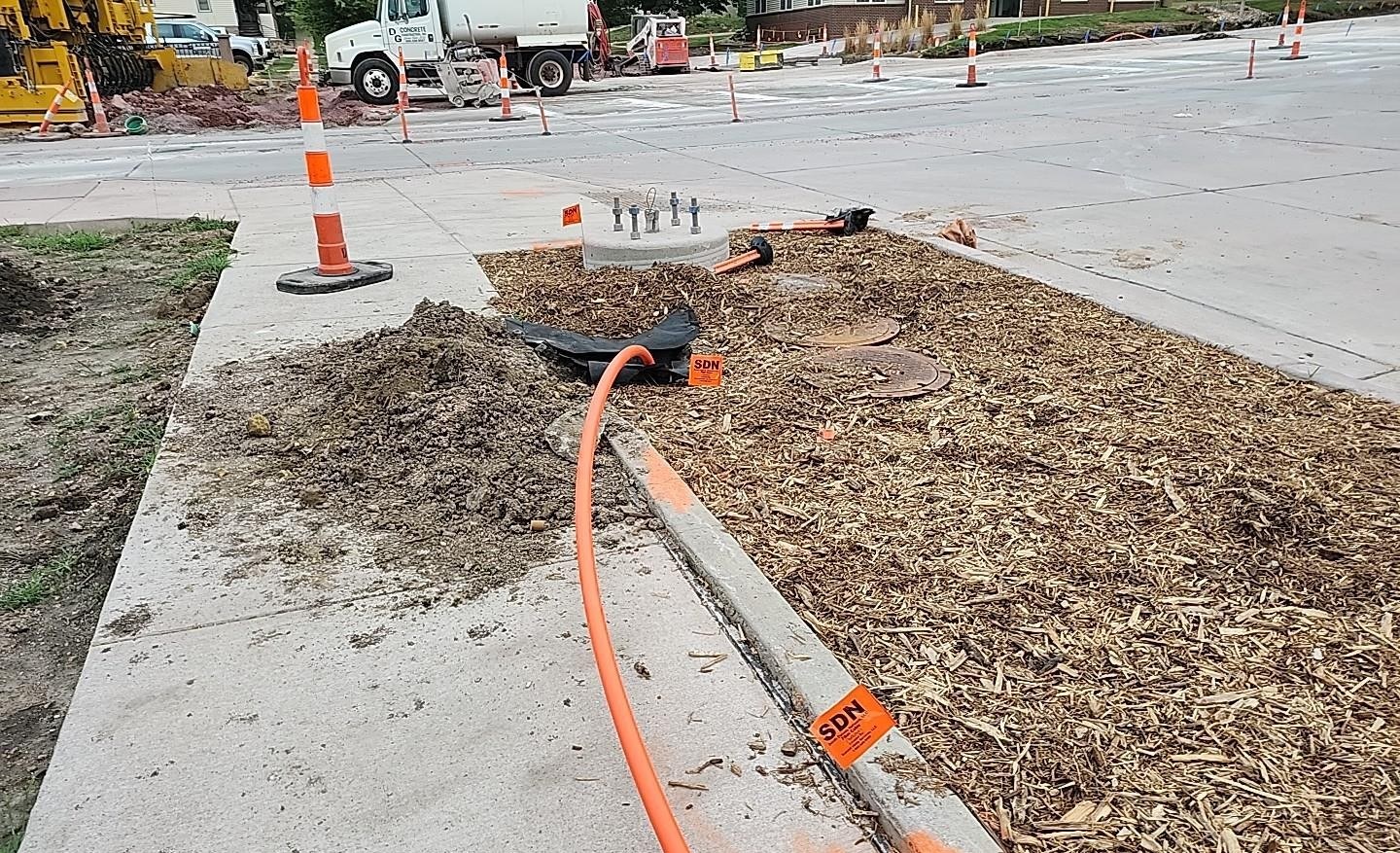
The call or website request creates a “ticket” and South Dakota 811 then alerts all local utilities of the location. The utilities are required to visit the site and mark with flags any underground pipes, wires, cables or fiber. Utilities have 48 hours to finish the locate.
Codi Gregg, Executive Director, says a recent change has impacted the timeframe for locates. A call to 811 prompts the ticket immediately, but the clock doesn’t start ticking on the 48 hours until 12:01 a.m. This gives utilities adequate time to schedule locates, Gregg says. Previously, the clock started ticking at the time the ticket was created.
Once all underground pipes, cables, and fiber are located, digging can safely proceed. Homeowners or contractors then have 21 days to complete the work. Tickets can also be updated for an extended 21 days if work is continuing.
In 2025, South Dakota 811 received 176,664 calls and 864,468 utilities were notified for locates. No tax dollars are used for South Dakota 811. The program is entirely funded by the utilities. “Utilties pay when they do a locate through 811. They pay $1.05 for each notice,” Gregg says.
Gregg says often, homeowners don’t realize that projects as simple as planting a tree, installing a new fence, or building a new deck in their yard requires a call to South Dakota 811. Any digging of any kind can impact underground infrastructure, and failure to notify South Dakota 811 could make a homeowner or contractor liable for costs associated with repairing a damaged line.
“It’s a state law that anybody who is moving earth does have to have a locate” she says.
Jake VanDewater, Vice President of Engineering, Operations and IT with SDN Communications, says the importance of calling 811 can’t be overstated. And while an accidental cut to an SDN fiber cable might seem minor at first glance, the impact can still be critical.
“Making accidental contact with a fiber optic line may not be as dangerous as an electrical line, but the critical nature of the information traveling the network would be severely disrupted,” he says. For instance, a cut to fiber line can trigger cascading outages that cripple lifeline services, including hospitals, 911 dispatch centers, and emergency responders, while also cutting off access to vital medical networks or financial institutions.
“Fixing a fiber optic line is a complex, time-consuming process that requires dispatching specialized repair crews, safely excavating the site, placing new cable, and meticulously splicing and testing every strand back into the existing network,” he explains.
For more information about South Dakota 811, visit sdonecall.com.